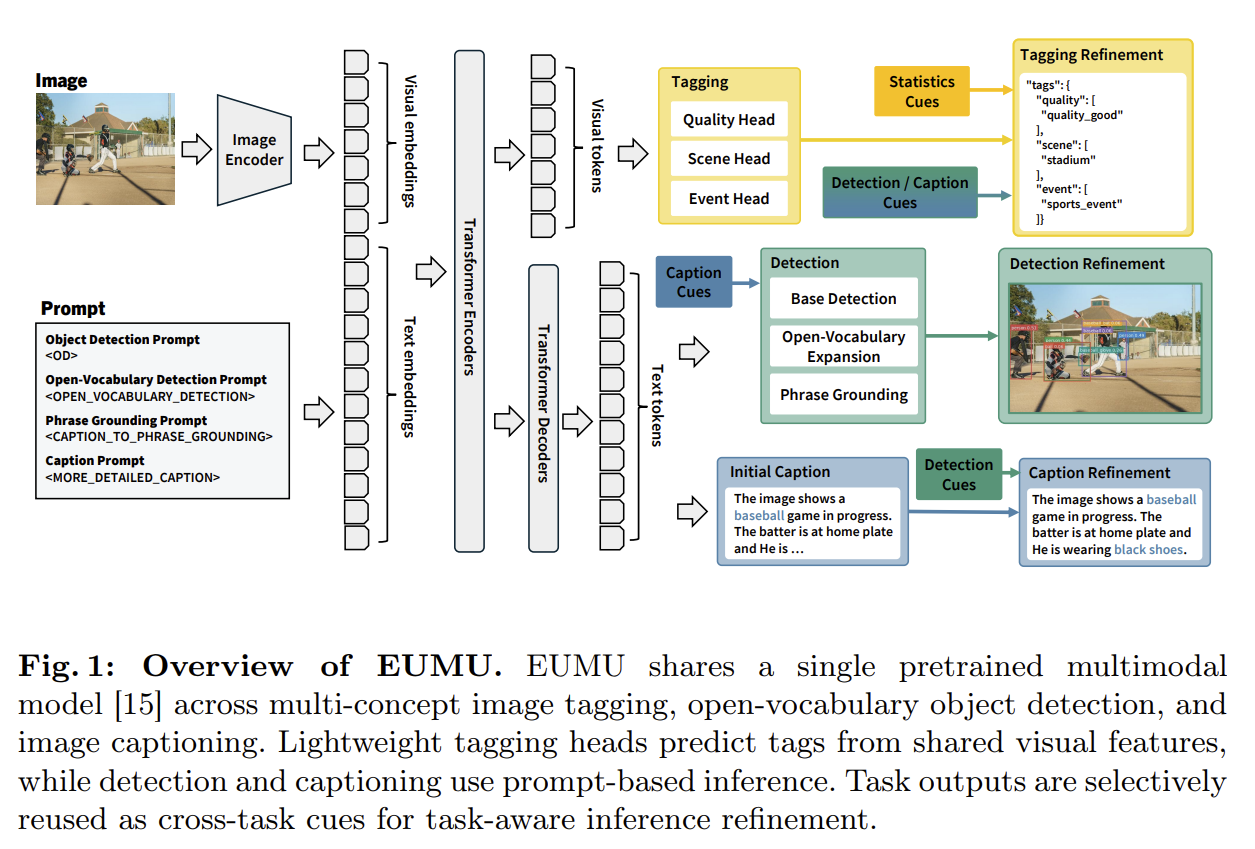
The Mobile Unified Multimodal Understanding (MUMU) Challenge requires a single efficient model to jointly perform multi-concept image tagging, open-vocabulary object detection, and image captioning. We present Efficient Unified Multimodal Understanding (EUMU), the winning solution for the MUMU Track of the 8th LSVOS Challenge. EUMU builds on a shared pretrained multimodal model, using its prompt-based capabilities for detection and captioning and training lightweight heads on shared visual features to predict quality, scene, and event tags. Rather than treating the three tasks independently, EUMU applies task-aware inference refinement by reusing task outputs as cross-task cues. This design unifies all three tasks within a single model while satisfying the challenge’s resource constraints. EUMU contains 239.169M parameters, requires 23.947 GFLOPs, uses 4.5 GB of peak inference memory, and achieves a final challenge score of 17.3409.
@article{kil2026eumu,title={Efficient Unified Multimodal Understanding (EUMU): Winning Solution for the MUMU Track at the 8th LSVOS Challenge},author={Kil, Dayoung and Kim, Seong-heum},journal={arXiv preprint arXiv:2609.19451},year={2026},}
WACV
One-Cycle Structured Pruning via Stability-Driven Subnetwork Search
Deepak Ghimire, Dayoung Kil, Seonghwan Jeong, and 2 more authors
IEEE/CVF Winter Conference on Applications of Computer Vision (WACV), 2026
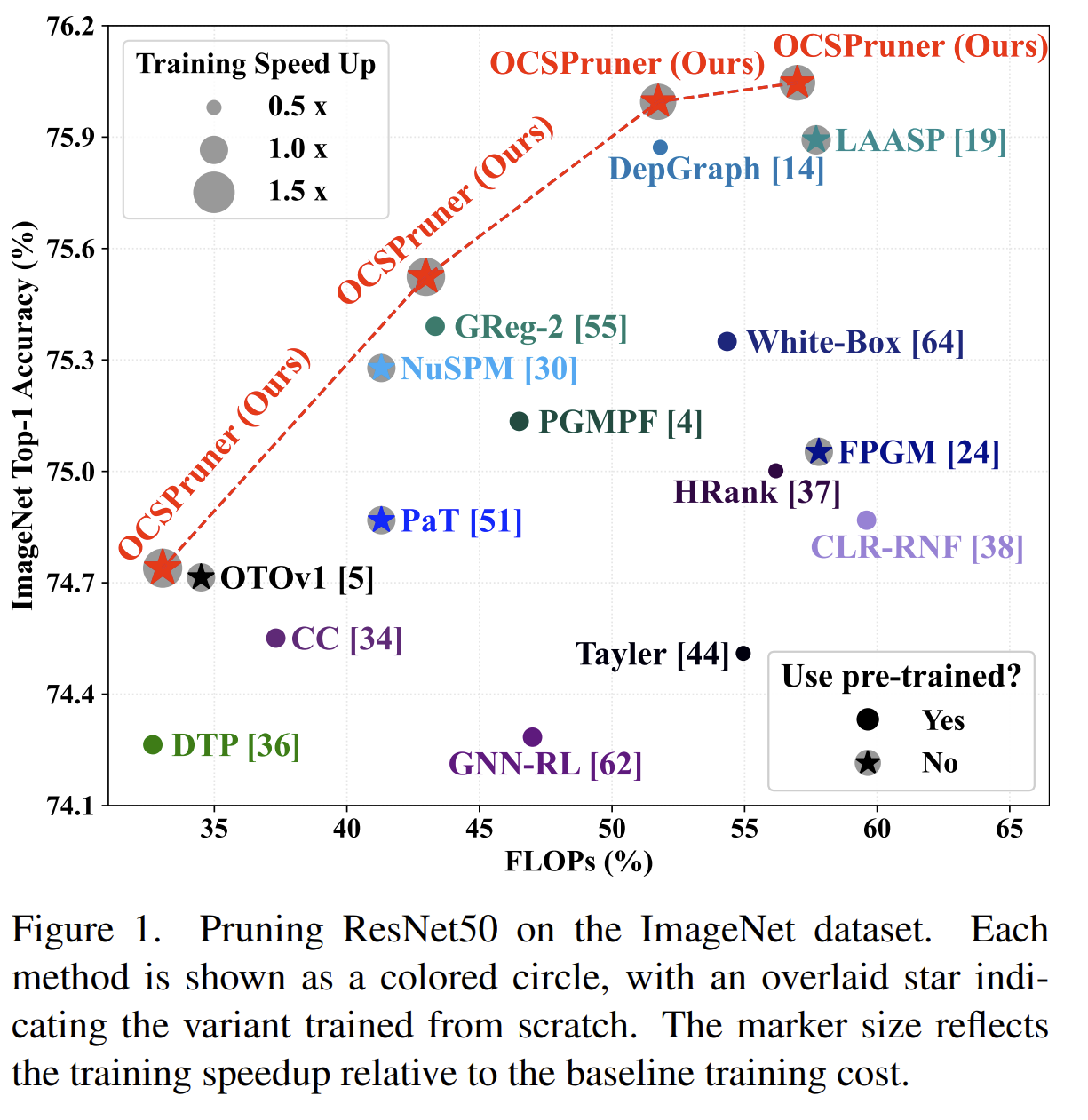
Existing structured pruning typically involves multi-stage training procedures that often demand heavy computation. We propose an efficient framework for one-cycle structured pruning that integrates pre-training, pruning, and fine-tuning into a single training cycle. The core idea is to search for the optimal sub-network during the early stages of network training, guided by norm-based group saliency criteria and structured sparsity regularization. We introduce a novel pruning indicator that determines the stable pruning epoch by assessing the similarity between evolving pruning sub-networks across consecutive training epochs. Extensive experiments on CIFAR-10/100 and ImageNet using VGGNet, ResNet, MobileNet, and ViT architectures demonstrate state-of-the-art accuracy while being one of the most efficient pruning frameworks in terms of training time.
@article{kil2025ocspruner,title={One-Cycle Structured Pruning via Stability-Driven Subnetwork Search},author={Ghimire, Deepak and Kil, Dayoung and Jeong, Seonghwan and Park, Jaesik and Kim, Seong-heum},journal={IEEE/CVF Winter Conference on Applications of Computer Vision (WACV)},year={2026},}
2024
ICCAS
A Study of Structured Pruning for Hybrid Neural Networks
Deepak Ghimire, Dayoung Kil, and Seong-heum Kim
In 24th International Conference on Control, Automation and Systems (ICCAS), 2024
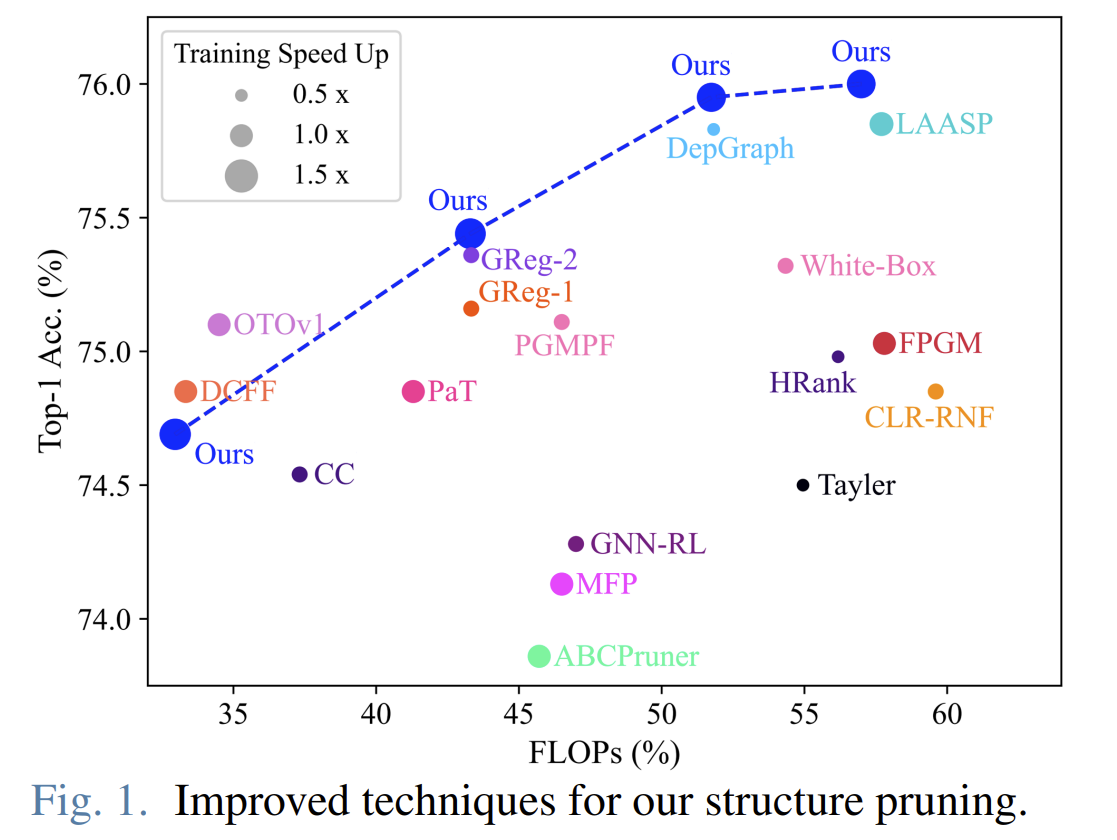
We explore the impact of structure pruning on model compression for CNN–transformer hybrid architectures. Our approach automatically selects filter pruning criteria from a specified pool based on magnitude or similarity, and adjusts the specific pruning layer in each iteration based on the network’s overall loss on a small subset of training data. Experiments on VGGNet, ResNet, and MobileNet with CIFAR-10 and ImageNet validate the effectiveness of the proposed method.
@inproceedings{ghimire2024structured,title={A Study of Structured Pruning for Hybrid Neural Networks},author={Ghimire, Deepak and Kil, Dayoung and Kim, Seong-heum},booktitle={24th International Conference on Control, Automation and Systems (ICCAS)},pages={1110--1113},year={2024},doi={10.23919/ICCAS63016.2024.10773379}}
2022
Electronics
A Survey on Efficient Convolutional Neural Networks and Hardware Acceleration
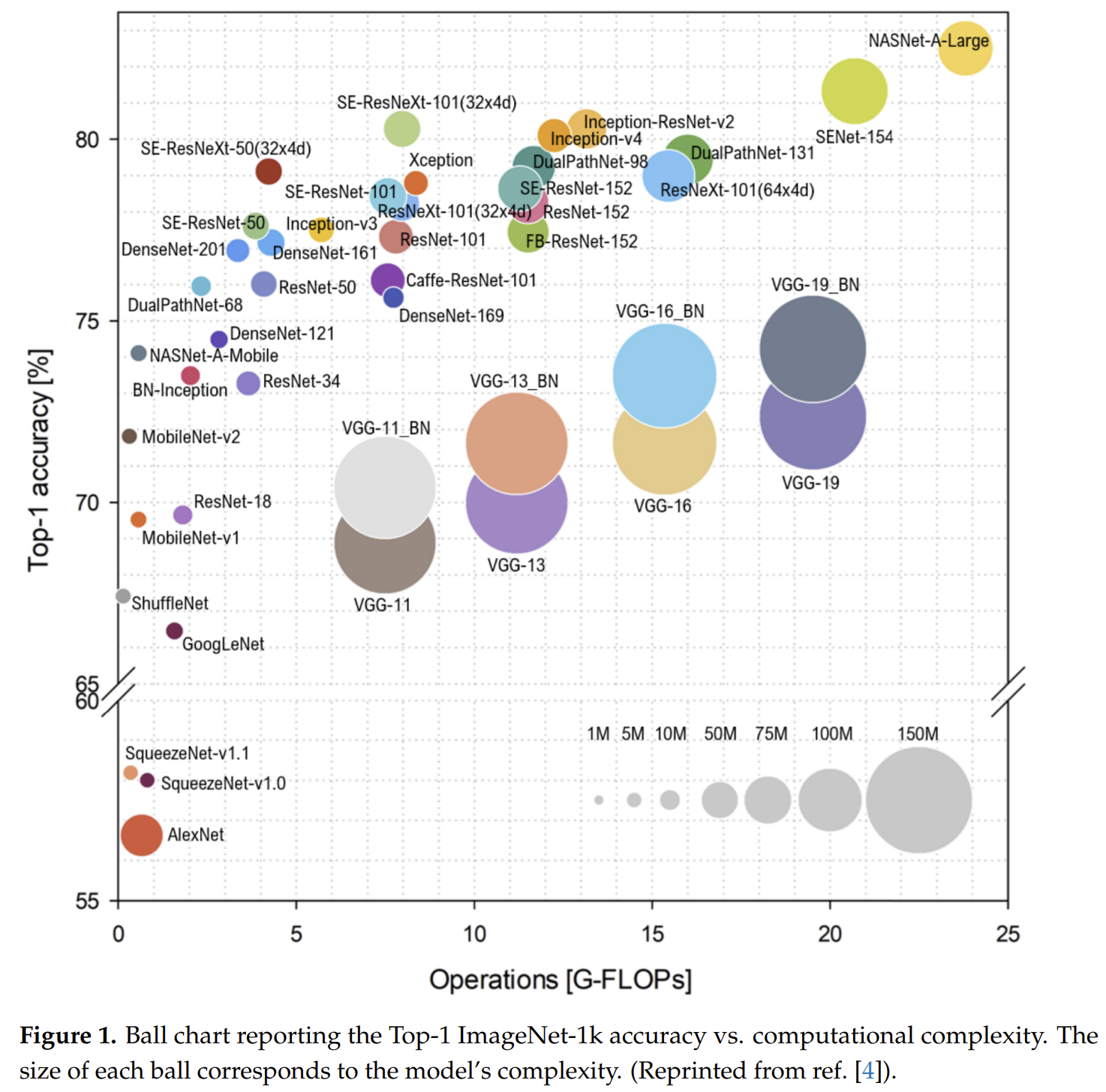
Over the past decade, deep-learning-based representations have demonstrated remarkable performance in academia and industry. In this review, to improve the efficiency of deep learning research, we focus on three aspects: quantized/binarized models, optimized architectures, and resource-constrained systems. Recent advances in light-weight deep learning models and network architecture search (NAS) algorithms are reviewed, starting with simplified layers and efficient convolution and including new architectural design and optimization.
@article{ghimire2022survey,title={A Survey on Efficient Convolutional Neural Networks and Hardware Acceleration},author={Ghimire, Deepak and Kil, Dayoung and Kim, Seong-heum},journal={Electronics},volume={11},number={6},pages={945},year={2022},publisher={MDPI},doi={10.3390/electronics11060945},}
ICCAS
Lightweight Room Layout Estimation using a Single Panoramic Image
Dayoung Kil and Seong-heum Kim
In 22nd International Conference on Control, Automation and Systems (ICCAS), 2022
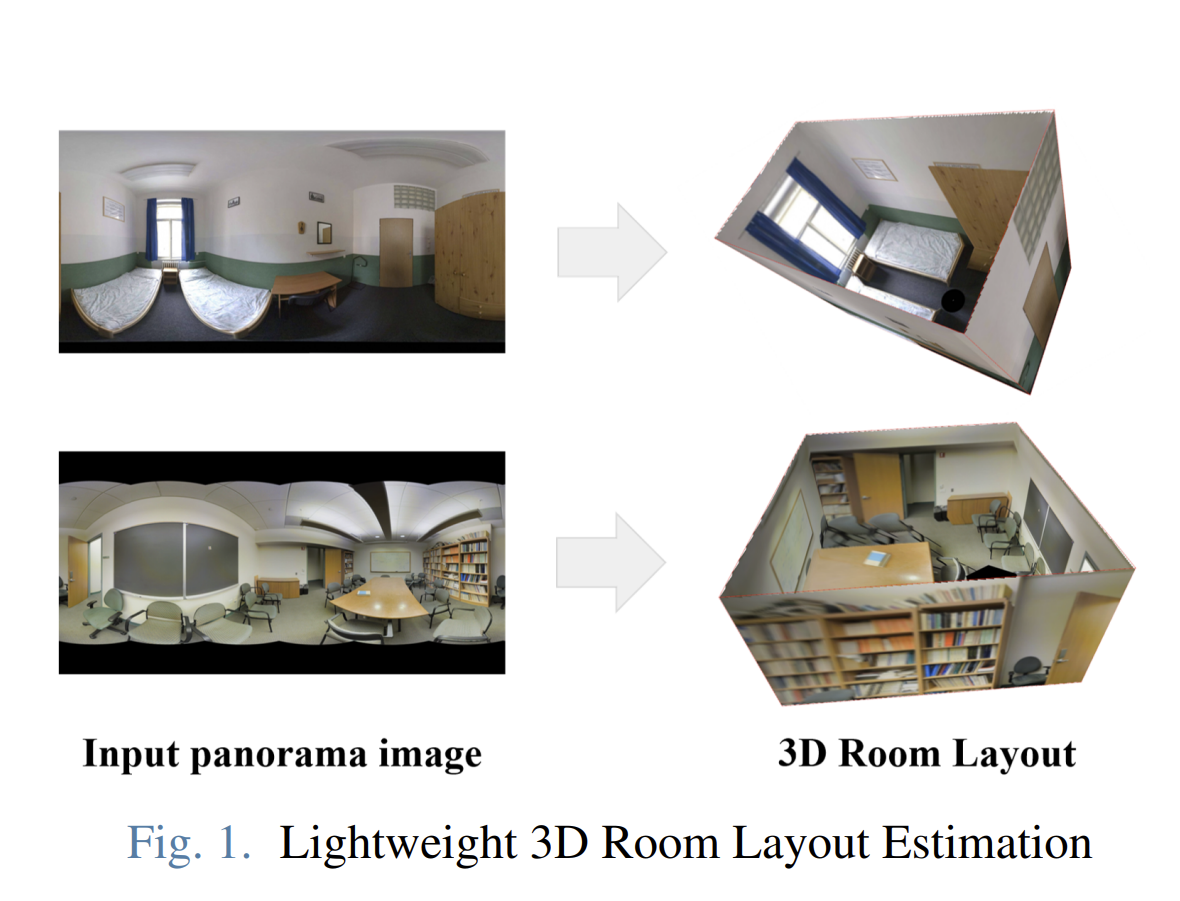
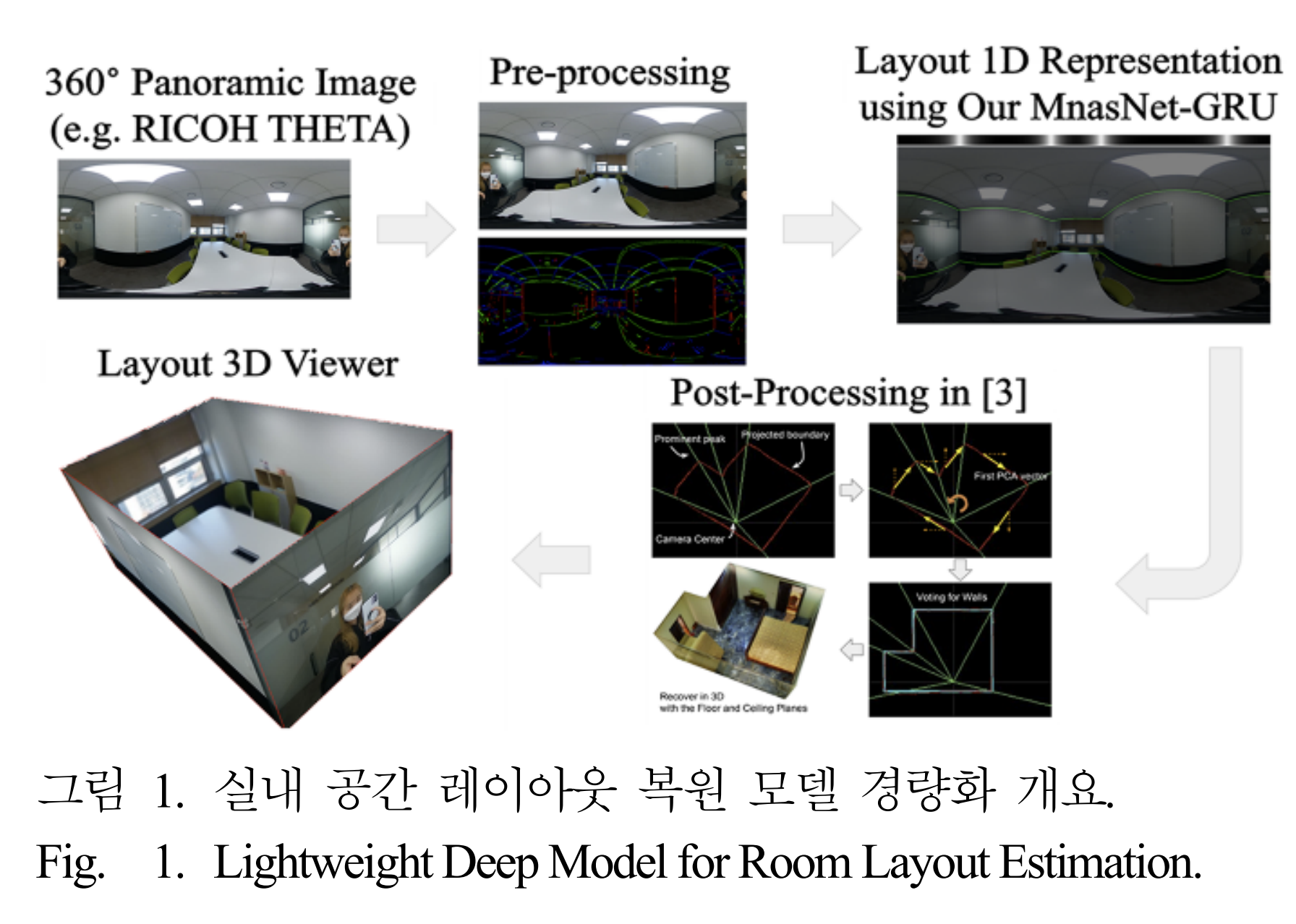
We suggest a lightweight deep representation for room layout estimation using a single panoramic image. Based on HorizonNet, we replace the feature extraction networks of ResNet and LSTM with a platform-aware neural architecture search model (MnasNet) and a gated recurrent unit (GRU). The proposed architecture utilizes sampling-based optimization and uses only about 1/2 fewer parameters than the existing network.
@inproceedings{kil2022iccas,title={Lightweight Room Layout Estimation using a Single Panoramic Image},author={Kil, Dayoung and Kim, Seong-heum},booktitle={22nd International Conference on Control, Automation and Systems (ICCAS)},pages={1951--1953},year={2022},doi={10.23919/ICCAS55662.2022.10003901},}
ICROS
Lightweight Deep Learning for Room Layout Estimation with a Single Panoramic Image
Dayoung Kil and Seong-heum Kim
Journal of Institute of Control, Robotics and Systems (KCI), 2022
We present a lightweight deep learning model for room layout estimation. In contrast to the baseline HorizonNet that uses ResNet+LSTM, we focus on MnasNet and GRU with sampling-based hyperparameter optimization. The lightweight model required approximately half as many parameters compared to the original method while achieving competitive performance on Stanford2D3D, PanoContext, and a real-world panorama dataset.
@article{kil2022icros,title={Lightweight Deep Learning for Room Layout Estimation with a Single Panoramic Image},author={Kil, Dayoung and Kim, Seong-heum},journal={Journal of Institute of Control, Robotics and Systems (KCI)},volume={28},number={10},pages={868--873},year={2022},}